
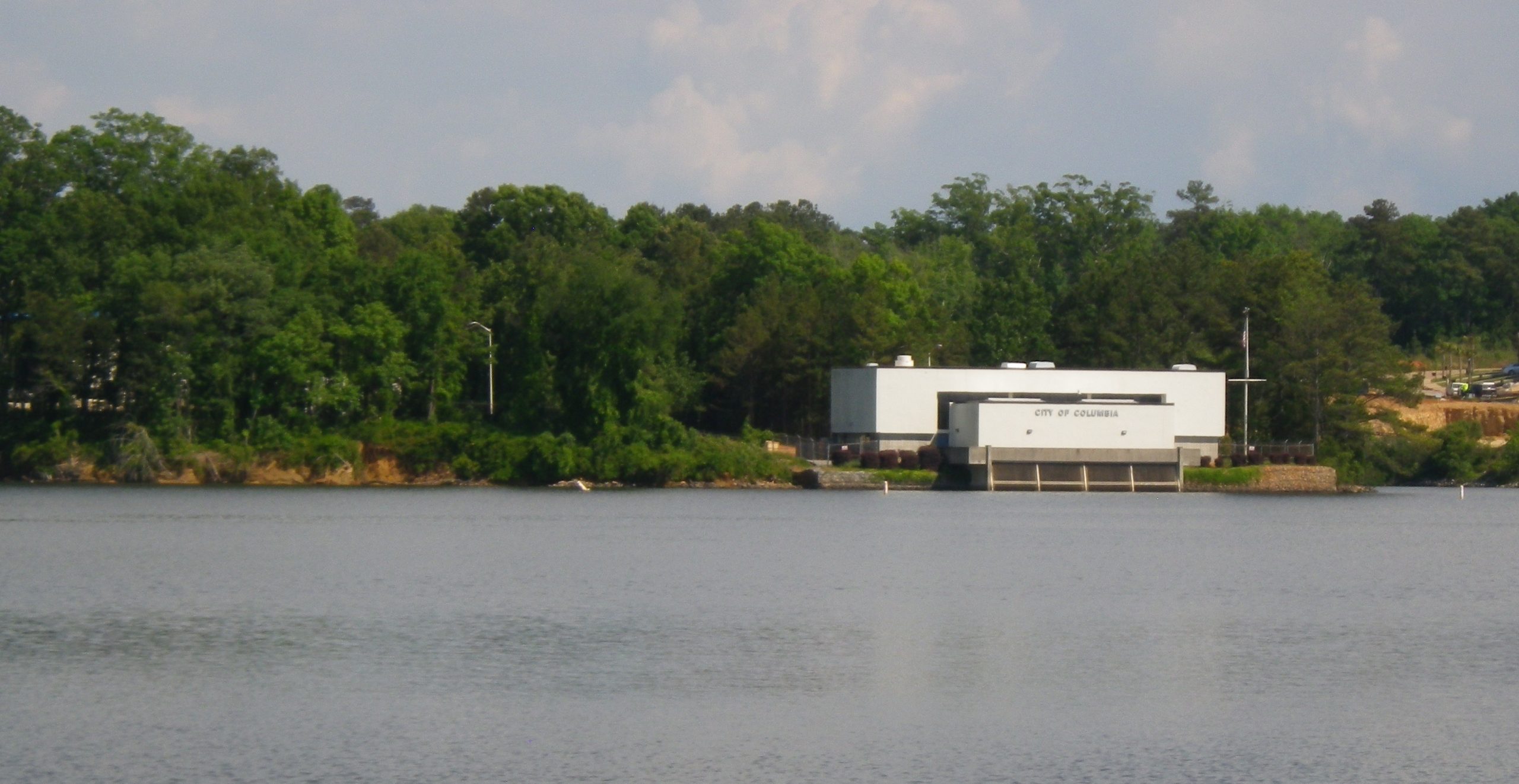
Lake Murray is a treasure. Here in the Midlands of South Carolina, Lake Murray provides a place for outdoor recreation, beautiful waterfront homes, and most importantly drinking water for hundreds of thousands of families throughout parts of Columbia and all of West Columbia, Cayce, Irmo, Chapin, Lexington, and Newberry. For this reason, Columbia Water and our partners around the Midlands work to educate the public about keeping Lake Murray and other waterways clean. It is vital that these bodies of water be protected as we play, live, and drink from these precious natural resources.
Lake Murray is a Water Source
What is Algae?
According to the Centers for Disease Control and Prevention (CDC), “algae and cyanobacteria are simple, plant-like organisms that live in the water”. You may have seen it before in a home aquarium or nearby waterways. Algae typically resembles a greenish (sometimes with hints of blue) film over the water’s surface.
Sometimes there may be a thick matte or foam-like substance that floats heavily on top of the water’s surface. When there is an imbalance of environmental conditions in bodies of water, algae can “bloom” or grow quickly in response to the change.
These conditions include:
- weather that is excessively hot (especially during the summer months)
- an inflated amount of chemicals, like fertilizers, that speed up plant growth from stormwater runoff
- waterways that are low in volume due to natural evaporation or draining for maintenance
Why is Algae Harmful?
Algae blooms vary in type and harmfulness to local water sources. In the most severe cases, algae blooms can kill aquatic wildlife and produce poisonous toxins that release into source water. When these blooms are uncontrolled, the water body is not safe for humans or animals to swim, drink, or fish. The toxins released from algae can overpower water quality issues for local utility companies. This may lead to a rise in maintenance costs to solve the secondary problems created by algae like strong odors and poor taste in tap water.
What Can I Do To Stop Algae Growth On Lake Murray and Protect Our Waterways?
- Don’t litter! Be sure to clean up after your group when visiting our waterways for recreational use like boating, fishing, or swimming. Trash any unwanted items.
- Dispose of pet waste in a trash can! Never leave pet waste in your yard or toss it into leaf piles or compost. Pet waste contains excessive amounts of bacteria that can be harmful to our drinking water supply and has the potential to impact our water quality.
- Reduce the use of chemical fertilizers and pesticides in your yard. The chemicals in these products may be harmful to aquatic wildlife and encourage algae growth in our waterways like lakes, streams, or rivers.
- Consider using phosphorus-free fertilizers and yard care products to limit nutrient-rich runoff to storm drains and waterways. Composting yard clippings and vegetable scraps is a cost effective and easy way to reduce the need for chemical based fertilizer.
- Use plants that are native to the area where you live.
- Consider installing a rain barrel to reduce water runoff to storm drains and waterways.
- Consult professionals for large outdoor projects involving chemicals like fertilizers, pesticides, paint or paint thinner, and other common products used for home improvement.